
Caring for Green Oak: How it weathers, moves and lasts.
- Marty Cooper-Chinnick
- Jul 10
- 7 min read
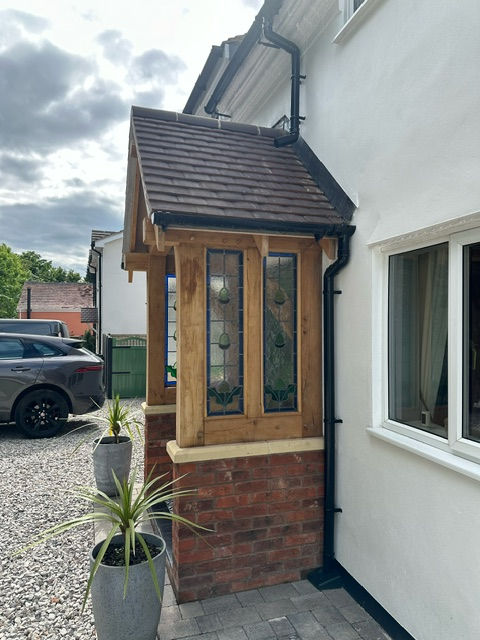
If you have just bought a green oak porch, or frame — or you are about to — you may be wondering how to look after it. The reassuring answer is: far less than you would expect. Green oak is one of the most durable and self-sufficient building materials in Britain, with a track record of standing for centuries with almost no intervention. But it is also a living, natural material that will change in front of your eyes over the first few years, and knowing what is normal (and what is not) is the difference between watching those changes with pride and worrying about them needlessly. This guide walks you through everything an owner needs to know.
What "green oak" actually means
"Green" oak has nothing to do with colour. It refers to freshly sawn, unseasoned oak that still holds a high proportion of moisture — often 50–80% of its dry weight — because it has not been kiln-dried or air-dried for years. Oak framers work with green oak on purpose. When it leaves the sawmill it is softer, lighter and far easier to cut, chisel and shape into the precise mortice-and-tenon joints that define a traditional oak frame. A joint that is cut tight in green oak becomes tighter still as the timber dries and shrinks around the oak pegs, locking the whole structure together without a single screw or bolt.
The trade-off is that green oak does the bulk of its drying after your building is up. That drying is what produces the visual changes described in this guide — the silvering, the surface cracks, the occasional dark streak. None of it is a fault. It is the timber settling into its long, long life.
The weathering process: from honey to silver
The first thing you will notice is colour. Freshly worked green oak is a warm, pale honey colour. Left untreated and exposed to the weather, it changes gradually as natural tannins in the timber react with air, moisture and UV light. Over the first year or so the surface shifts from honey to a soft, silvery grey; over several years it deepens into the beautiful, weathered silver you see on old barns and timber-framed cottages.
This silvering is purely cosmetic. It does not weaken the timber or affect its structural integrity in any way — the oak underneath is exactly as strong as the day it was raised. Weathering is uneven at first: south- and west-facing faces, which catch the most sun and rain, silver faster than sheltered north-facing ones. This is normal and evens out over time.
Owners generally fall into two camps, and both are valid. Embrace the silver: do nothing. The oak will weather naturally to a silver-grey, needs no treatment, and will look entirely at home against brick, render or stone. This is the traditional choice and the lowest-maintenance option there is. Hold the honey: if you love the warm golden tone, you can slow the greying with a clear UV-protective oil or a specialist exterior oak finish. This is a choice, not a necessity — and it commits you to periodic re-coating.
Shakes and cracks: why they appear and why you shouldn't worry
This is the change that alarms new owners most, and it is the one that matters least. As green oak dries, it loses moisture and shrinks — but it shrinks far more across the grain than along it. The outer fibres dry and contract faster than the wet core, and the resulting tension has to go somewhere. It is released as splits that run along the grain of the timber. These are called "shakes".
Shakes are completely natural and, in the overwhelming majority of cases, do not affect the strength of the frame. A large oak beam is enormously over-engineered for the loads it carries; a shake that runs partway along its length removes none of that capacity. Shakes typically appear within the first one to three heating seasons as the timber acclimatises, and they often open in dry summer weather and close up again in damp winter months.
A few things worth knowing so you can watch them with equanimity:
Shakes usually run with the grain and taper — they are not clean breaks across the beam. A crack running square across the grain would be unusual and is worth asking your framer about, but longitudinal shakes are expected and desirable evidence of honest, solid oak.
They can be surprisingly deep and can make a sharp cracking or "pinging" sound as they form, especially in the first year. This startles people at night; it is simply the timber settling.
Resist the urge to fill them. Filler cracks and falls out as the oak continues to move, looks worse than the shake itself, and traps moisture. Shakes are part of the character of a real oak frame.
Movement and settlement
Alongside shakes, the frame as a whole will move a little as it dries and settles. Joints tighten, pegs bed in, and you may notice very small gaps opening or closing at junctions between timbers, or between the oak and adjoining masonry, plaster or glazing. This is expected in the first couple of years and is precisely why good oak framing is designed to accommodate movement rather than resist it.
What you should not see is significant, ongoing structural movement — timbers pulling apart at joints, doors or windows that progressively jam, or sagging. A well-built green oak structure settles and then stops. If movement seems to be continuing or worsening after the first couple of years, that is the moment to call your builder.
Tannin staining
Oak is rich in tannins — the same natural compounds that give the timber its durability and its colour. As green oak dries, moisture leaving the wood carries tannins to the surface, and where that tannin-laden water runs onto a lighter material below — render, brickwork, paving, plaster or painted surfaces — it can leave brown or black streaks. New owners sometimes mistake these for rot or damp. They are neither; they are simply tannin wash-off, and they are most active in the first year while the timber is shedding the most moisture.
Tannin staining is straightforward to deal with once the structure is weathertight and the timber has largely dried. Streaks on the oak itself weather away over time. Streaks on adjacent surfaces can usually be cleaned; oak-frame specialists commonly use a dilute solution of oxalic acid (sold as a proprietary oak or timber brightener), which lifts tannin and iron staining and returns the timber to a fresh tone. Always follow the product instructions, wear gloves and eye protection, test a small area first, and rinse thoroughly. You can reduce staining on vulnerable surfaces below the frame during the first year simply by rinsing them down periodically before marks have a chance to set.
Iron staining: keep the wrong metals away
Tannins react with iron and ordinary steel to produce distinctive blue-black stains — the same chemistry once used to make ink. This is why traditional oak frames use oak pegs rather than nails, and why any ironmongery, fixings, brackets, screws or lighting fitted to or near an oak frame should be stainless steel, or a suitable non-ferrous or coated fixing. A cheap steel screw left in an oak beam will bleed a dark halo into the timber within weeks of getting damp. If you are hanging anything on your porch or frame — a lantern, a house number, a hook — reach for stainless steel.
Do you need to treat green oak at all?
For most owners, the honest answer is no. Oak is naturally durable and, left untreated, an external oak frame will happily weather to silver and stand for generations. Treatment is a cosmetic choice, not a preservation requirement. Oak's high tannin content and dense heartwood make it resistant to rot and insect attack without any chemical preservative, which is one of the reasons it has been the timber of choice for British building for a thousand years.
The single most valuable thing you can do for the life of the building has nothing to do with the oak itself: keep water moving and draining. Keep gutters, downpipes and any drainage channels clear so that water is not held against the timber or allowed to pool. Oak copes brilliantly with getting wet and drying out; what shortens the life of any timber is standing water and permanent damp with no chance to dry.
If you do want to hold the colour, choose a breathable, penetrating exterior oil rather than a varnish. Penetrating oils soak in and let the timber breathe; hard, film-forming varnishes crack as the oak moves, let water underneath, and peel into a patchy mess that is miserable to strip back. Don't seal fresh green oak — let it release its moisture first — and accept that any external finish needs re-coating every year or two to keep looking fresh. There is no "treat once and forget" option for holding colour outdoors.
A simple seasonal rhythm
Every few months: glance over the frame. Check gutters and downpipes are clear and draining away from the timber. Clear leaves and debris from any ledges.
First spring and summer: rinse down render, brick or paving below the frame to stop tannin streaks setting. Expect shakes to open in dry weather — this is normal.
Once a year: check no ordinary steel has been introduced — new fixings, brackets, lights. Confirm the base of posts is free-draining and not holding damp.
If you've oiled it: inspect the coating and re-coat before it fails completely, following the product's recommended interval.
As needed: treat tannin or iron staining with an oxalic-acid oak brightener. Test first, protect yourself, rinse well.
What to expect, year by year
Months 1–12: the most active period. Colour begins shifting from honey towards grey; the first shakes appear, sometimes audibly; tannin may streak nearby surfaces. Keep water draining and rinse vulnerable surfaces.
Years 1–3: drying and settlement continue but slow down. Shakes may open and close seasonally. Silvering becomes more even across the frame.
Year 3 onwards: the oak has largely reached equilibrium with its environment. It settles into a stable, weathered silver and asks essentially nothing of you but the occasional look at the guttering.
The bottom line: green oak is about as low-maintenance as a building material gets. It silvers, it shakes, it may streak a little in its first year — and every one of those changes is normal, harmless and part of what makes a real oak frame beautiful. Keep water draining freely, keep ordinary steel away, decide whether to embrace the silver or hold the honey, and otherwise let the timber get on with the centuries-long job it is extremely good at.


Comments